Zachary Jablow
Welcome! I am a Ph.D. candidate at the University of Illinois Urbana-Champaign and a visiting lecturer in the political science department at Bryn Mawr College.
I research and teach American politics, political communication, and public opinion. Broadly speaking, my work studies how politics is represented in mass media and perceived by ordinary people. Since my undergrad at the University of Maryland, I have been particularly interested in public discourse surrounding US wars and the ways mass publics understand their government's conduct abroad. My dissertation research takes up this theme, investigating the legitimation of US foreign policy by pairing quantitative, observational public opinion data with in-depth interviews and news media content analyses.
My academic work has been published in Public Opinion Quarterly and Media, War & Conflict. Other writing of mine has been published in the magazine and news site Jewish Currents.
Research
Please contact me if you would like a PDF version of any of my research, including working papers.
Publications
Jablow, Zachary, and Scott L. Althaus. 2026. "Reevaluating News and Opinion Dynamics in the Iraq War: New Evidence for Social Identification Effects." Public Opinion Quarterly. https://doi.org/10.1093/poq/nfag055
Abstract
What causes changes in popular support for American wars? Competing theories posit that either the tone and content of wartime news or social identity cues conveyed through mass media should play the larger role. We offer new evidence in this debate by analyzing a novel set of rolling cross-sectional opinion data collected continuously over 13 months during an early phase of the Iraq War and pairing it with data on news intensity and the evaluative tone of news coverage during that same period. Contrary to conventional information updating explanations of war support but consistent with a social identification process, we find that greater intensity of wartime news coverage is associated with increases in aggregate support even after controlling for the evaluative tone of that news coverage.
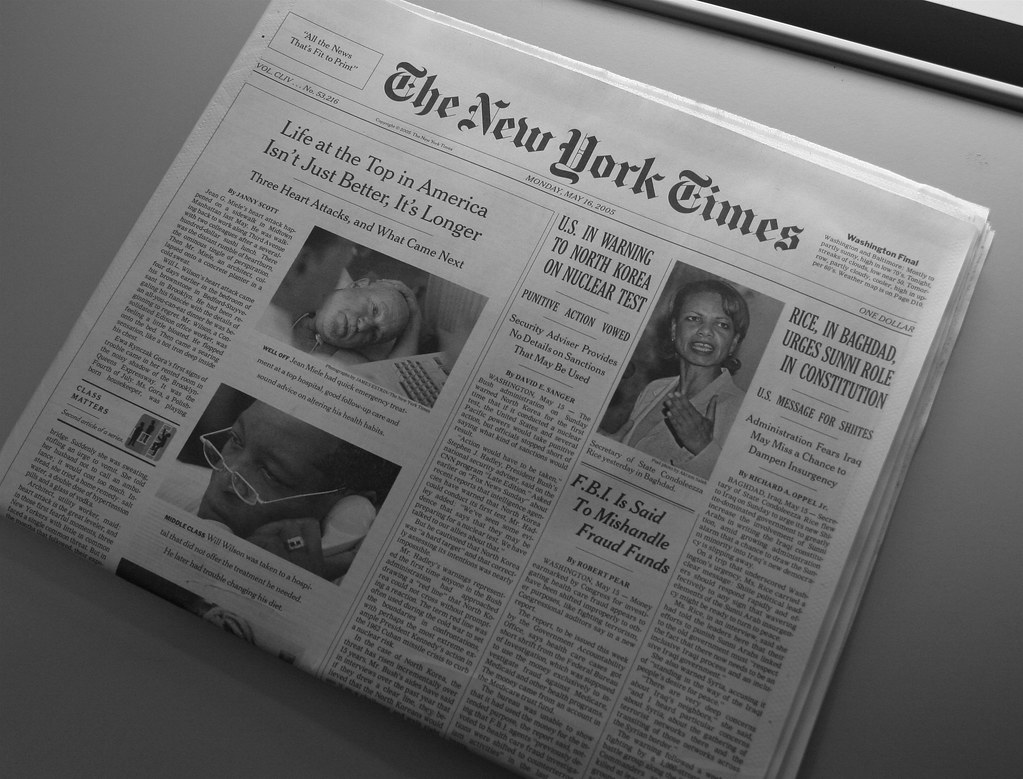
Jablow, Zachary, and Tianhong Yin. 2025. "Naming Violence in The New York Times: US Foreign Policy and the Politics of Genocide Recognition." Media, War & Conflict. https://doi.org/10.1177/17506352251365425
Abstract
Genocide recognition has come to represent a major political battlefield since the term 'genocide' was coined in the 1940s, and the news media are one of the primary sites for contestation over how to categorize different acts of political violence. While scholarship has largely contradicted the popular notion of press independence in the US, previous studies that investigate Western media bias in genocide recognition often rely on single case studies and have sometimes been dismissed for being 'anecdotal'. With particular attention to six postwar cases of mass violence that have been widely identified in scholarship as genocides, the authors collect time series data spanning the start of each case to 2020. Their analysis explores systematic differences in the volume of coverage of each case and the proportion of articles that employ the term 'genocide' in The New York Times. Consistent with indexing and hegemony theories of press–state relations, the authors find that atrocities committed by US allies and clients receive less attention over time, and the term 'genocide' – as well as other contested categories of political violence such as 'massacre' and 'slaughter' – is more often withheld.
Working Papers
Opinion That Matters: Bringing Behavior Back into the Study of Public Opinion (with Scott L. Althaus and Buddy Peyton)
Abstract
What people do is more politically consequential than what they say to pollsters. But for a variety of historical reasons, the concept of public opinion has come to focus narrowly on individual attitudes anonymously elicited through surveys without also considering collective behaviors that appear in public. Comparing data during 1945-2005 from 686 opinion surveys asking respondents what they consider the most important political problem and over 10,000 mass political events, we find only a weak relationship between the topical distributions of surveyed most important problems and the topical distributions of behavioral events. Revisiting a more theoretically compelling paradigm for public opinion focused on manifest actions rather than latent attitudes, we raise questions about the political relevance of conventional forms of opinion data. Especially considering the challenges facing the random sample survey, our empirical findings underscore the prospect for novel methods to restore political behaviors to the study of public opinion.
Adversaries or Allies? Elite Press Coverage of US Foreign Policy, 1986-2020
Abstract
How the media cover US wars has animated decades of research, but despite much speculation we have little concrete evidence about how the tenor of domestic public discourse about American military conflicts may have changed since the start of the digital revolution. An earlier generation of research found that the press largely defers to official narratives and marginalizes domestic dissent. Conventional wisdom today holds that with the end of the Cold War foreign policy consensus and the emergence of new media, even legacy news operations have turned more adversarial. But it is difficult to draw strong conclusions from this literature, with inconsistent standards for what counts as critical coverage and a reliance on single case studies to make claims about possible over-time changes. This study reports a systematic content analysis of foreign policy debates in the New York Times, Washington Post, and Wall Street Journal from two pairs of comparable events across periods of monumental political and technological change: "counter-terror" operations by Republican administrations—the 1986 bombing of Libya and the 2020 assassination of Qasem Soleimani—and NATO air wars led by Democratic administrations and billed as "humanitarian interventions," in Libya in 2011 and Yugoslavia in 1999. There is indeed greater opposition to administration policies regarding military force in recent years. However, despite what appears to be growing animosity between the White House and the press corps, fundamental dissent—criticism of the morality or legality of US policy and not just the manner in which it was conducted—is even further on the margins in recent cases than was previously observed.
Americans' Beliefs About War in Their Own Words
Abstract
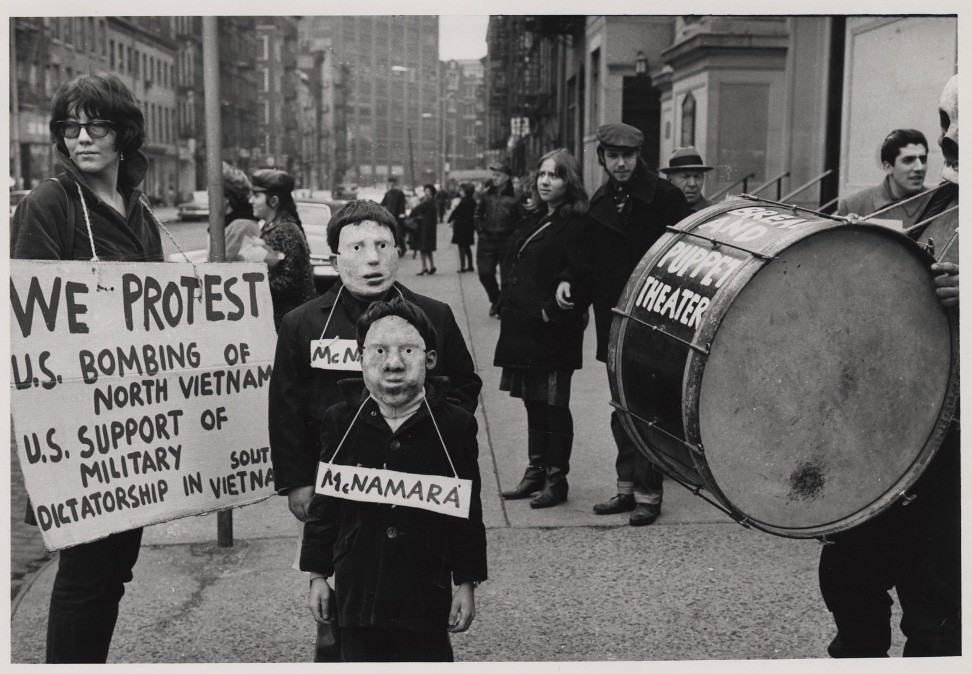
The United States has for generations now been fighting near-constant wars on multiple continents and underwriting other states' wars while maintaining by far the world's largest military. This state of affairs must be justified to the domestic population; it requires a significant degree of popular consent and mass mobilization, or at least the absence of overwhelming opposition. How, then, has the US managed to maintain a sufficiently supportive or quiescent public? In what ways do ordinary citizens accept or reject the legitimacy of US military operations? While illuminating some of the determinants of surveyed opinion on matters of war and peace, the foreign policy public opinion literature has largely sidestepped the question of legitimation. This study reports findings from 17 in-depth interviews with a diverse range of Americans around the Philadelphia metro area and rural Maryland. Particular attention is paid in this analysis to ways that people make judgments and draw moral conclusions about their government's conduct in issues about which they may have limited knowledge. Drawing on Bourdieu's notion of doxa, the analysis draws out some of the taken-for-granted knowledge and unstated assumptions behind popular perceptions of US wars.
Teaching
Courses Developed and Taught at Bryn Mawr
Democracy, Politics, and the Media
Course description: This course explores the politics of mass communication with an emphasis on the United States. Special attention will be paid to the relationships between the public, media, and government; the institutional structure of the news media and recent changes to the communication system; and factors shaping the construction of the news such as journalistic routines, media economics, and interactions with political actors. Students will critically engage with contemporary political discourse and journalism. Political communication is a truly interdisciplinary field of study whose subject matter cuts across traditional academic divisions. In this course, we will primarily be focused on the social science tradition, reading mostly in the literatures of political science, communication, and sociology.
Consent of the Governed: Mass Opinion and Public Discourse
Course description: This seminar explores how governments maintain widespread consent to their rule, or, as David Hume described it, "the easiness with which the many are governed by the few." We will study the politics of mass opinion and perception; political language, propaganda, and dissent; and the formation of political identities, with an emphasis on democratic politics and the US in particular. The course includes a mix of empirical social science, theory, and fiction. The readings and activities are meant to provide students a broad and theoretically grounded understanding of political behavior and public opinion. We will be analyzing contemporary political issues and discourse through the lens of philosophical debates on the nature of mass opinion, coercion, and consent.
Courses Developed (Not Yet Taught)
American Public Opinion
Course description: We will be studying public opinion and mass political behavior in the American context. This course explores the role of public opinion in the political process, enduring tensions in the idea of public opinion itself, and the power struggles that shape how people think and act and how we interpret different forms of mass political expression. During the semester, we will home in on different arenas, from the nature of party competition and partisanship to war and foreign policy to economic inequality and the welfare state. To that end, throughout the semester students will also develop their own analysis of public opinion research on a political topic of interest or conduct preliminary research.
Online Course Taught at Illinois
US Supreme Court
Graduate Assistant
Intro to US Government and Politics
Politics and the Media
US Constitution
Mentorship
UIUC Undergraduate Research Apprenticeship Program
CV
Contact
230 N Merion Ave
Bryn Mawr, PA 19010